
A client of mine used to think career change was a solo mission.
You figure out what you want.
You make a plan.
You execute it.
Easy peasy, right? If only it was that simple…
But for this leader, the idea of asking someone else for help felt like failure. Because he’d had to admit he couldn’t do it by himself.
So he read books and articles. Consumed newsletters about finding your passion and designing your life.
It helped – a little. It made him feel less alone in his confusion. But it didn’t help him take action.
What he didn’t realise at the time: The thing he actually needed wasn’t another worksheet. It was other people with different perspectives.
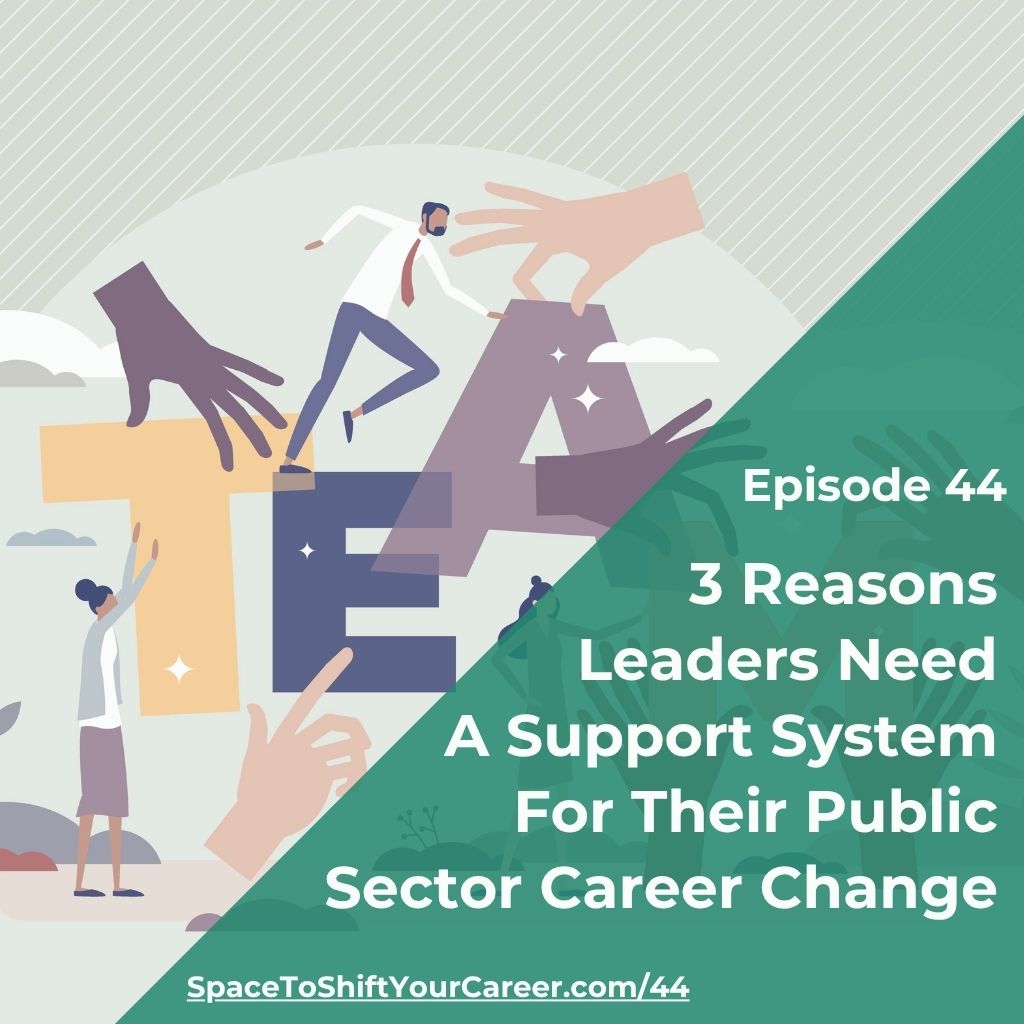
In this episode, I talk about why building your own support team isn’t a luxury – it’s the difference between struggling alone and actually moving forward.
Why Public Sector Leaders Tend To Think They Don’t Need Help
My client was frustrated and embarrassed for not having gotten much further by himself.
But asking someone else for support?
That would have meant vulnerability. Admitting he didn’t have it all figured out. And honestly, he would have called it ‘fluffy career advice’.
He wanted concrete tasks with predictable outcomes: the perfect LinkedIn profile. The secret networking formula. The worksheet that would finally spark clarity.
Not… people. That felt too soft.
It took him a while until he eventually realised, he was not getting anywhere with his approach.
In my experience, those who successfully changed careers all have one thing in common: They didn’t do it alone.
Changing careers is hard.
And hard things aren’t meant to be done alone.
When leaders reach out to work with me, they tell me they have supportive people in their life.
But also:
“My partner is supportive, but they don’t know what I should do any more than I do.”
“My family and friends mean well, but one wrong comment can send me spiralling into doubt.”
“I work in government, so I have to keep most of this bottled up at work.”
So they do have support. But the way they’ve been going about asking for it has not really worked for them.
They’ve been hoping for support to magically happen. Instead of intentionally creating it.
3 Benefits of Creating A Support Team For Your Career Transition
Working with leaders navigating career transitions, I’ve seen what actually works:
Stop hoping for general support.
Start recruiting specific people for specific roles.
In other words, treat building your support team the same way you’d recruit a team at work.
Identify your needs.
Create roles.
Make explicit requests.
This does 3 powerful things:
First: It forces you to get clear on what you actually NEED.
Are you stuck because you need ideas?
Accountability?
Emotional safety?
This clarity transforms your conversations from just chatting into productive discussions.
Second: It helps people actually HELP YOU.
Instead of floundering around trying to guess what you need, they know exactly what their job is. And they can do it better.
Third: It creates an ongoing STRUCTURE.
You’re not waiting for moments of desperation or turning every interaction into an awkward outpouring. You have rhythms and systems that keep you moving forward.
What Changes With The Right Support Team?
Leaders who felt stuck suddenly have momentum because they got out of their own head.
People who felt embarrassed about their career change suddenly feel energised by it. Because they’re surrounded by a few key people who believe in them.
People who were paralysed by fear start taking action. Because they have someone holding them accountable.
It’s remarkable how different the journey feels when you’re not doing it solo!
What Comes Next
In the next episode, I’ll talk about what might be stopping you from building your support team.
Because for many people – especially if you’re used to being the competent professional leader in the room – asking for support can feel uncomfortable. Vulnerable. Risky. Potentially humiliating.
So next episode, we’re tackling the emotional hurdles holding leaders back from building their career transition support team.
For today, I want to leave you with this: You don’t have to do this alone. And actually, you probably shouldn’t.
The support of others isn’t a nice-to-have. It’s your greatest asset.
Until next time: make space, rediscover YOU, and then take action.