
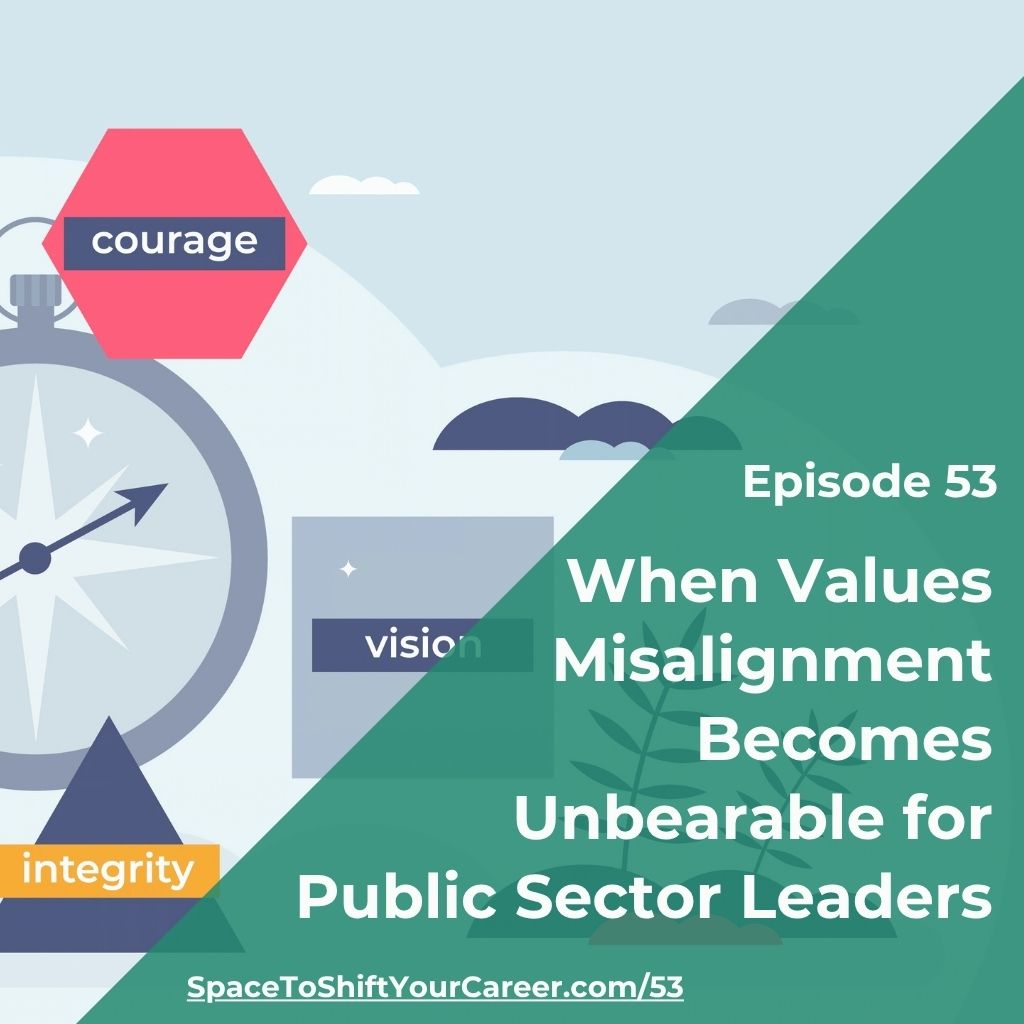
Your values work like a compass.
You might have heard this before. But what does it mean? Let me explain.
You trust the compass to find the way you want to go because the needle is pointing true north.
But when something throws it off, an interference like a bit of metal nearby, the needle starts to drift.
If you ignore the drift and keep walking, you end up further and further from where you actually meant to go.
Just like a compass that’s working well, you usually don’t think about your values. It happens subconsciously. When everything is in alignment, you don’t notice it.
But when the place where you work stops pointing in the same direction, when what’s rewarded, prioritised, and lived out every day around you stops matching what matters to you, that drift becomes impossible to ignore.
Today I want to tell you about a client who felt that drift, and what she did about it.
How Leaders Notice What Causes the Interference
My client came to me not knowing what to do. She suspected she couldn’t stay where she was. But she didn’t know what to do with it.
The moment it became clear to her that she needed to leave was during a debrief on a values exercise we did together.
She named her core values, and then realised they simply weren’t the ones being lived out in her organisation, day to day.
Once she saw that gap clearly, she couldn’t un-see it. And she realised it wasn’t something she could influence or fix from where she sat.
So she quit.
She enrolled part-time in a creative design course. Something she was passionate about and had wanted to do for years – but never made room for.
Not long after, she ran into a former boss. She mentioned she’d left her job. Her former boss immediately wanted to hire her for a few hours a week.
When she told her she was actually trying to move AWAY from that kind of work, toward the creative side, her former boss lit up. “Even better. I need someone who can do both.”
So that’s what she did: Part-time work she already knew how to do, part-time work in the direction she wanted to grow, and part-time study, all at once and in parallel.
That was her new portfolio career.
As she put it later: “It was almost too good to be true. But that’s what happened.”
“The moment I admitted to myself what I actually wanted,
opportunities started to appear.”
She laughed and added she’s not religious, but it felt like something out there was listening.
It wasn’t all smooth, though.
She went from being the expert to being the newbie. And she said that was genuinely hard. But she found something in it too:
“I ask about things my colleagues don’t question anymore. That helps the organisation pause and ask, does this still make sense? I think that’s the value I bring now.”
The 3 Things that Helped this Leader Change Careers
My client told me what set things in motion for her were these three things:
- Noticing the drift.
- Reconnecting with what she actually wanted.
- Telling her network.
Making space for herself to do this work with me was the FIRST step underlying all of that.
Are you feeling that same pull between where you are
and what actually matters to you?
That’s worth paying attention to. Don’t ignore it.
It might be time to do a career audit and get clear on your core values, too.
Until next time: make space, rediscover you, and then take action.