
I want to tell you about Chris. Chris was 46 years old. He’d built an impressive career as a government lawyer.
Worked his way up to being one of the respected voices in his ministry. Smart, competent, well-paid. By most measures, he’d made it.
But when we talked, he told me something in a whisper, like it was shameful: He’d love to become a teacher.
“That ship has sailed,” he said.
“I’m too old now. I have a wife, two children, a mortgage. I’ve invested over 20 years in my career as a lawyer. I can’t just throw that away to start over in education. It’s too late.“
He said it with such certainty. Like the door had closed and locked behind him.
And I almost leapt through my laptop screen.
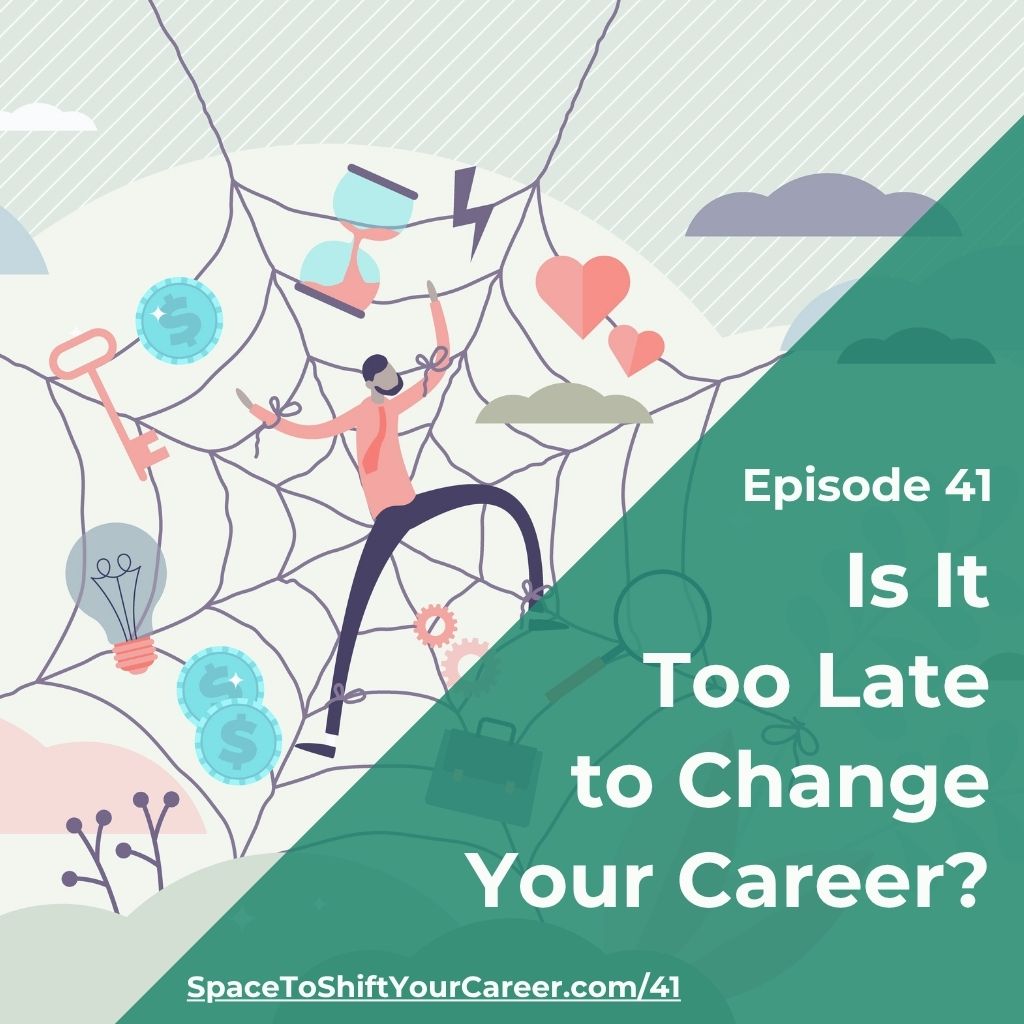
Because Chris wasn’t trapped. He was caught in a story. A story that started completely unraveling once we started pulling at it.
In this episode, I want to talk about the stories that keep us stuck. The narratives that feel like facts but actually aren’t. And what happens when you dare to challenge them.
6 Stories We Tell Ourselves
One of the most useful things I’ve learned in my work with people navigating change is this: Most of the time, we’re not actually trapped.
We’re trapped by a story. A story about who we are. What’s possible. And what we can’t do anymore.
Chris had built a fortress of stories around his dream of leaving his department to become a teacher. And they all felt completely true.
Until we examined them.
Let me walk you through the stories Chris was telling himself. And I’m guessing you’ll recognise at least one or two.
Story #1: Age – “I’m Too Old Now”
Chris was 46.
And he was convinced that at 46, you didn’t get second chances. That the time for major career changes had passed. That he’d already used up his opportunity for reinvention.
Here’s what’s actually true: If you’re in your 30s, 40s, 50s or even 60s, you’re not at the end of your career. You have 10, 20, 30, or even 40 years of work ahead of you.
Because with an aging population, in many countries, the legal retirement age is already moving up closer to 70.
Research shows something interesting:
People who change careers later in life
often do better than those who change early.
Why?
Because you have more skills. More resilience. More wisdom. More life experience to bring to the table.
Age isn’t a barrier. It’s actually an advantage.
Story #2: Sunk Cost – “I’ve Already Invested 20 Years”
Chris’s biggest objection was this:
“I’ve spent over 20 years becoming a government lawyer. If I leave now, that’s all wasted. That doesn’t make sense.”
But here’s the thing about sunk costs: They’re already spent. Whether Chris stayed as a lawyer or left to teach, those 20 years were already gone.
The real question wasn’t: “Have I wasted my past?” It was:
“What do I want for my future?”
And the skills Chris developed as a lawyer – research, communication, strategic thinking, handling complex situations and negotiations – those don’t disappear. They travel with him into teaching and educational leadership.
Nothing is wasted. It all becomes part of who he is.
Story #3: Reputation – “What Will People Think?”
Chris was worried about his reputation. About what people would say if he left a prestigious public sector career to become a teacher. Wouldn’t people think he was throwing away his potential?
But here’s the reality: Most people aren’t paying as much attention to your choices as you think they are.
And the ones who matter – your real friends, your family – they want to see you happy and fulfilled. They would not judge your career decisions.
Besides, Chris had integrity. He’d worked his way up in his department. He could work his way up in education, if that’s what he wanted.
And people respect someone who has the courage to pursue their calling, even when it looks unconventional.
Story #4: Capability – “I’m Not Capable of Being a Teacher”
Chris thought:
“I’m a good lawyer. I understand law and policy. But teaching? That’s different. I’d be starting from scratch. Managing a classroom. Understanding young people. And I’m not sure I can do it.”
But Chris hadn’t always been a good lawyer either. He’d learned that profession. Developed those skills. Figured things out as he went.
That ability – to learn, to adapt, to figure things out – that’s still inside him. It didn’t disappear when he became experienced and successful. It’s portable.
The skills he’d developed in one field – analysis, communication, problem-solving, resilience – those transfer.
And the new skills he’d need as a teacher? He could learn them. Just like he learned everything else.
Story #5: Serendipity – “My Success Was Just Luck”
Chris told me something that surprised me. He said:
“I got lucky in my legal career. I happened to be in the right place at the right time. I feel like I don’t deserve to have success in another field.”
Despite over 20 years of building a career, despite earning respect from his colleagues, despite delivering results, and his proven competence – Chris still believed his success was an accident.
This is so common among high achievers. They minimise their own effort and ability, and attribute their success to circumstances.
But here’s what I told him:
“You’re not here by accident. You worked for this. You earned your place. You deserve to be where you are. And that means you could do it again. In a different field. In a different way. You’re not a one-trick pony depending on a lucky draw. You’re capable and competent.”
Story #6: Disaster – “Everything Will Fall Apart”
Underneath all of Chris’s other stories was a deeper fear:
“What if I leave law and I fail at teaching? What if I can’t handle it? What if I’ve made a terrible mistake?“
When we’re comfortable in a role, and potentially a little bored and under-utilised intellectually, we sometimes forget how capable and resilient we actually are.
But Chris had taken risks before. He’d navigated complex legal questions. He’d handled high-pressure situations. He’d figured things out when circumstances required him to.
He was much smarter and more resourceful than he gave himself credit for.
And so are you.
What Happened With Chris
Chris sat quietly when we finished our conversation. I thought maybe he was upset. Maybe I’d pushed too hard.
But at our next session, he walked in grinning from ear to ear.
He’d had an honest conversation with his wife. He’d told her about his dream. And you know what? She was wildly supportive. They figured out the financial practicalities together should Chris decide to go for it.
Chris had begun to explore the pathway to teacher training. He had started to have conversations with a few teachers to find out what it was really like. He was lining up a job shadow in a classroom.
Chris was in the middle of exploring and testing his option. Once he’s validated it, he’ll already be a long way in to prepare taking the leap.
The Stories I Tell Myself
I’m 43 now – a little younger than Chris was when we had that conversation but not far off.
And I notice something: I tell myself versions of Chris’s stories all the time.
“It’s too late to do this differently.”
“You can’t learn to be good at something new.”
“People expect you to be a certain way. Don’t risk it.”
And especially this one:
”Why can’t you just be happy with what you have?”
These stories hit differently when you’re in the middle of your career. When you have more to lose. When the stakes feel higher.
But the stories are the same. And they’re just as untrue.
It’s Not Too Late
So here’s what I want to leave you with: You might be stuck in a story right now. A narrative about who you are, what’s possible, what you’re allowed to want.
The story might feel completely true. It might feel like fact.
But it’s worth examining.
- What story are you telling yourself about your career? About what’s possible? About what’s too late?
- Is it actually true? Or is it a story that’s keeping you small?
I’m not telling you that you need to make a dramatic change. That’s not my call. That’s yours.
But you know what wouldn’t hurt?
Getting back in touch with the dreams you’re keeping locked away. Giving yourself permission to explore them.
You might not be good at it at first. You once had to learn what you’re doing now too.
But you can always start again. Any time you like. It’s never too late.
You only get one life. And you deserve to make the most of it.
Until next time: make space, rediscover YOU, and then take action.